Fire Risk Assessments
Comprehensive fire risk assessments by qualified assessors. Identify hazards, evaluate risks, and receive an actionable remediation plan. Legal requirement under the RRFSO 2005.
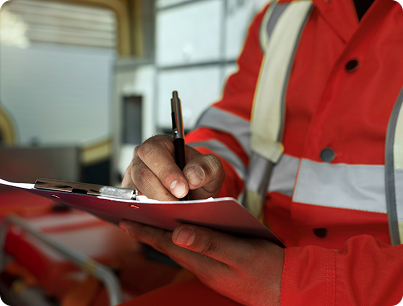
Comprehensive Fire Risk Assessments by Qualified Assessors
KS & A Security Solutions Ltd delivers thorough, BAFE-accredited fire risk assessments for every property type. Our qualified assessors help responsible persons meet their statutory obligations under UK fire safety legislation. We serve businesses, landlords, property managers, and public-sector organisations throughout London, Hertfordshire, and the Home Counties.
Every assessment we produce is a defensible, court-ready document — not a tick-box exercise. We identify fire hazards, evaluate risks to people, and deliver a prioritised action plan that keeps your premises safe and your legal duties discharged.
Legal Context: Your Statutory Duty
The Regulatory Reform (Fire Safety) Order 2005 (RRFSO)
The RRFSO places a clear legal duty on the “responsible person” — typically the employer, building owner, landlord, or managing agent — to carry out and regularly review a suitable and sufficient fire risk assessment. This applies to virtually all non-domestic premises, including the common areas of flats and HMOs.
Failure to comply is a criminal offence. Enforcement authorities (typically the local fire and rescue service) can issue enforcement notices, prohibition notices, and — in serious cases — pursue prosecution with unlimited fines or imprisonment.
The Fire Safety (England) Regulations 2022
These regulations introduce extended duties for multi-occupied residential buildings, particularly high-rise blocks (18 m and above, or 7+ storeys). Requirements include:
- Wayfinding signage: Secure information boxes containing floor plans and building wayfinding details accessible to fire crews.
- External wall system checks: Annual inspections and reports on external wall construction for high-rise residential buildings.
- Fire door checks: Quarterly checks on communal fire doors, and annual checks on flat entrance doors (best-effort basis) for buildings 11 m and above.
- Monthly lift checks: For evacuation lifts and firefighting lifts in high-rise blocks.
- Information to residents: Displaying fire safety instructions clearly and providing residents with relevant fire safety information.
Our assessors stay current with evolving legislation and guidance, ensuring your assessment reflects the latest compliance requirements.
Our Fire Risk Assessment Services
Commercial Fire Risk Assessments
Offices, retail premises, warehouses, factories, hotels, restaurants, and leisure venues. We assess:
- Means of escape (travel distances, exit widths, stairway protection)
- Fire detection and alarm provisions (BS 5839-1 compliance)
- Emergency lighting adequacy (BS 5266)
- Firefighting equipment and signage
- Management procedures, staff training, and emergency plans
- Storage and housekeeping practices, including control of combustibles
Residential Fire Risk Assessments
Houses in Multiple Occupation (HMOs), purpose-built blocks of flats, sheltered housing, and care homes. We cover:
- Compartmentation and fire separation between dwellings and common areas
- Automatic fire detection (LD1/LD2/LD3 grade specifications per BS 5839-6)
- Emergency lighting in escape routes
- Management of fire doors and self-closing devices
- Resident evacuation strategies (simultaneous, phased, or stay-put)
Educational and Healthcare Assessments
Schools, colleges, nurseries, medical centres, and nursing homes. These settings present unique challenges — vulnerable occupants, phased evacuation, and 24-hour occupancy. We work closely with facility managers to develop robust fire safety strategies tailored to each environment.
Review and Update Assessments
Regulatory guidance recommends reviewing your fire risk assessment at least annually, or sooner if there has been a material change — alterations to the building, a change in occupancy, a near-miss, or a fire incident. We provide:
- Scheduled annual review services
- Post-incident reviews
- Refurbishment and change-of-use assessments
- Desktop or site-based updates depending on scope
Our 5-Step Assessment Process
-
Identify Fire Hazards Sources of ignition, fuel, and oxygen. We examine electrical systems, heating appliances, cooking facilities, smoking areas, and stored materials.
-
Identify People at Risk Who is on the premises, when, and where. Special consideration for vulnerable persons, staff working alone or in isolated areas, visitors unfamiliar with the layout, and neighbouring premises.
-
Evaluate, Remove, or Reduce Risks Assess the likelihood and potential severity of a fire. Recommend control measures using the hierarchy of protection — from elimination and substitution through to engineered controls and procedural safeguards.
-
Record, Plan, Inform, and Instruct Produce a comprehensive written report with significant findings, action plans, and emergency planning guidance. Advise on staff training needs and information for residents.
-
Review Establish a review cycle and identify trigger events that would prompt an earlier reassessment. We can manage this cycle on your behalf through retained services.
Frequently Asked Questions
Is a fire risk assessment a legal requirement?
Yes. Under the Regulatory Reform (Fire Safety) Order 2005, the “responsible person” for any non-domestic premises must carry out and maintain a suitable and sufficient fire risk assessment. If you employ 5 or more people, the significant findings must be recorded in writing. This duty applies to employers, building owners, landlords, and managing agents. The common areas of residential blocks and HMOs are also covered.
How often should a fire risk assessment be reviewed?
At minimum, annually. However, you should review it sooner — and commission a new assessment if necessary — following any material change: structural alterations, changes to work processes, a significant change in the number or type of occupants, a fire or near-miss incident, or the introduction of hazardous substances. The responsible person should also periodically satisfy themselves that the existing assessment remains valid, even where no obvious change has occurred.
What happens if I do not have a fire risk assessment?
Non-compliance is a criminal offence. Your local fire and rescue authority may inspect your premises at any time. Penalties range from an informal notice to a formal enforcement notice requiring compliance within a specified period. Serious or persistent breaches can result in a prohibition notice (restricting or closing your premises), prosecution, unlimited fines, and custodial sentences of up to two years. Beyond the legal penalties, the reputational damage and potential invalidation of your buildings insurance can be severe.
What does a fire risk assessment involve?
A qualified assessor visits your premises — normally during working hours so they can observe real-world conditions and speak with staff. The visit typically takes 2–4 hours depending on building size and complexity. The assessor inspects all accessible areas, examines fire safety systems and records, and evaluates management procedures. You receive a written report within 5–7 working days, detailing significant findings, a prioritised action plan, and emergency planning recommendations.
Can I do my own fire risk assessment?
Legally, yes — provided you are competent to do so. However, the courts have made clear that “competence” requires sufficient training, experience, and knowledge. For anything beyond very small, simple, low-risk premises with few occupants, the government’s own guidance recommends using a professional assessor. An assessment produced by an unqualified person that fails to identify significant risks is not “suitable and sufficient” in the eyes of the law, leaving the responsible person exposed.
What does BAFE accreditation mean?
BAFE (British Approvals for Fire Equipment) is the UK’s independent registration body for fire safety service providers. A BAFE-registered company has been audited by a UKAS-accredited certification body and found competent against defined scheme requirements (in our case, BAFE SP205 for fire risk assessments, Life Safety). Choosing a BAFE-registered assessor gives enforcing authorities, insurers, and other stakeholders confidence that your risk assessment meets the required standard. KS & A Security Solutions is proud to hold BAFE registration alongside our NSI Fire Gold accreditation.
Why Choose KS & A Security Solutions?
- BAFE-registered assessors — independently audited for competence
- NSI Fire Gold accredited — the highest standard for fire safety service providers
- Legal defensibility — every report designed to withstand scrutiny from enforcing authorities
- Serving since 2026 — over a decade of fire safety expertise across Hemel Hempstead, London, Hertfordshire, and the Home Counties
- Multi-sector experience — from corner shops to apartment blocks, warehouses to care homes
- Plain-English reporting — clear findings, practical recommendations, no jargon
Book a Fire Risk Assessment
Do not leave your legal obligations to chance. Contact our team today to schedule a fire risk assessment at your premises.
📞 +44 7423 127081 | ✉️ info@ksasolutions.uk
Related Services
- Fire Safety Training — On-site staff training, warden and marshal courses, evacuation drills
- Security Systems — CCTV, intruder alarms, access control, and door entry
- Solar PV & Electrical — MCS-certified solar installation, battery storage, EV charging
Our Fire Risk Assessments Services
- Commercial Fire Risk Assessments
- Residential Fire Risk Assessments (HMOs, Flats)
- Educational & Healthcare
- Review & Update Assessments